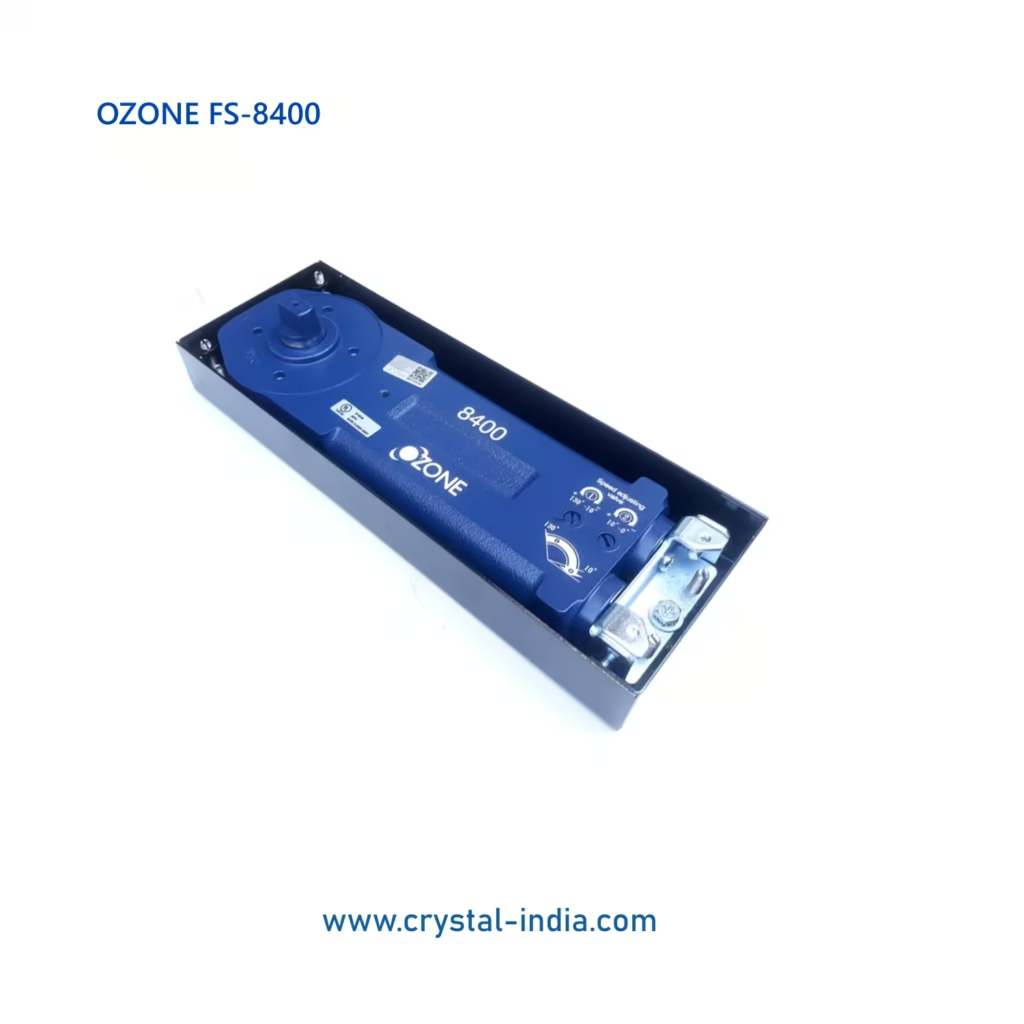
Choosing the Right Floor Spring
When it comes to modern architecture, the “invisible” details often make the biggest impact. Floor springs (also known as floor door hinges) are the unsung heroes of door hardware. They provide that sleek, high-end look by hiding the closing mechanism under the floor, ensuring doors operate with both elegance and safety.
However, not all floor springs are created equal. Choosing the right one depends on your door’s weight, the direction it swings, and the traffic flow of your space. Here is a breakdown of the most common types:
1. Directional Specialists
The most basic choice starts with how you want your door to move.
- Single-Action Floor Springs: Designed for doors that open in one direction only (either inward or outward). These are the workhorses of standard office doors and retail shops where traffic flow is predictable.
- Double-Action Floor Springs: The ultimate in versatility. These allow doors to swing both ways and automatically return to the center. You’ll find these in high-paced environments like hospital corridors or restaurant kitchens.
2. Functionality & User Experience
Sometimes, you need the door to do more than just close.
- Hold-Open Floor Springs: Perfect for areas that experience “rush hours.” These feature an adjustable mechanism that lets the door stay open at a specific angle (usually 90° or 105°). This is a lifesaver for conference rooms or busy building entrances.
- Free-Swing Floor Springs: Designed for accessibility. These offer almost zero resistance when moving the door manually, making them ideal for schools, hospitals, and residential care facilities where ease of use is a priority.
3. Advanced Control & Aesthetics
For those who need precision or a specific look, these options provide the most customization.
- Adjustable Floor Springs: These are the “smart” choice for custom projects. They feature adjustable valves that allow you to fine-tune the closing speed and latching strength. If your building has high wind pressure or heavy doors, this is the type you need.
- Overhead-Concealed Closers: While technically installed in the door frame rather than the floor, they serve the same purpose. They offer a completely hidden profile, making them the favorite for high-end residential designs where floor-level aesthetics (like expensive rugs or stone) cannot be disturbed.
Single Cylinder vs. Double Cylinder Floor Springs
While the exterior housing may look similar, the “engine” inside determines how much control you have over the door.
1. Single Cylinder Floor Springs
The single cylinder is the standard hydraulic setup. It uses one internal piston to control the closing and latching speed of the door.
Advantages:
- Cost-Effective: Significantly more affordable than double-cylinder models, making them ideal for budget-conscious projects.
- Compact Design: Often features a shallower cement box, which is easier to install in thin floor slabs.
- Simplicity: Fewer moving parts mean they are generally easier for general contractors to install and adjust.
Disadvantages:
- Limited Power: Not recommended for exceptionally heavy or wide doors.
- Basic Control: It can be harder to fine-tune the “back-check” (the resistance that prevents the door from being flung open too hard).
- Wear and Tear: In high-traffic areas, a single cylinder may wear out faster as it carries the entire hydraulic load alone.
2. Double Cylinder Floor Springs
Double cylinder models utilize two separate hydraulic pistons. One usually manages the main closing cycle, while the second manages the final latching or the “back-check” safety feature.
Advantages:
- High Weight Capacity: Capable of handling massive, heavy glass or timber doors that a single cylinder simply couldn’t support.
- Precision Timing: You can set a fast closing speed and a very slow, gentle latching speed independently, preventing finger-trapping.
- Superior Safety: The secondary cylinder often acts as a “buffer,” preventing the door from hitting a wall if pushed too hard.
- Longevity: By distributing the hydraulic pressure across two cylinders, the unit typically lasts much longer in high-traffic environments like shopping malls.
Disadvantages:
- Higher Price Point: They are a premium product and carry a higher price tag.
- Complex Installation: They require a more skilled technician to calibrate the two cylinders so they work in harmony.
- Larger Footprint: The housing is often deeper and wider, which might require deeper excavation in the floor.