When designing a modern space, the staircase, balcony, or terrace railing is no longer just a safety requirement—it is a major design statement. Frameless glass balustrades have become the gold standard for contemporary architecture, offering unobstructed views and a sleek, minimalist aesthetic.
However, achieving the perfect balance of structural integrity and visual elegance depends heavily on two critical components: The Top Profile (Handrail) and The Bottom Profile (Base Channel/Spigot).
To help architects, interior designers, and homeowners make informed choices, we have compiled this ultimate guide breaking down the most common types of aluminium handrail profiles available in the market.
TOP ALUMINIUM PROFILES
Part 1: Aluminium Handrail Top Profiles (The Touchpoint of Design)
The top profile serves a dual purpose: it protects the edge of the glass panels from high impact and provides a comfortable grip for users. Depending on the architectural style (industrial, minimalist, classic, or commercial), different geometric shapes are preferred.
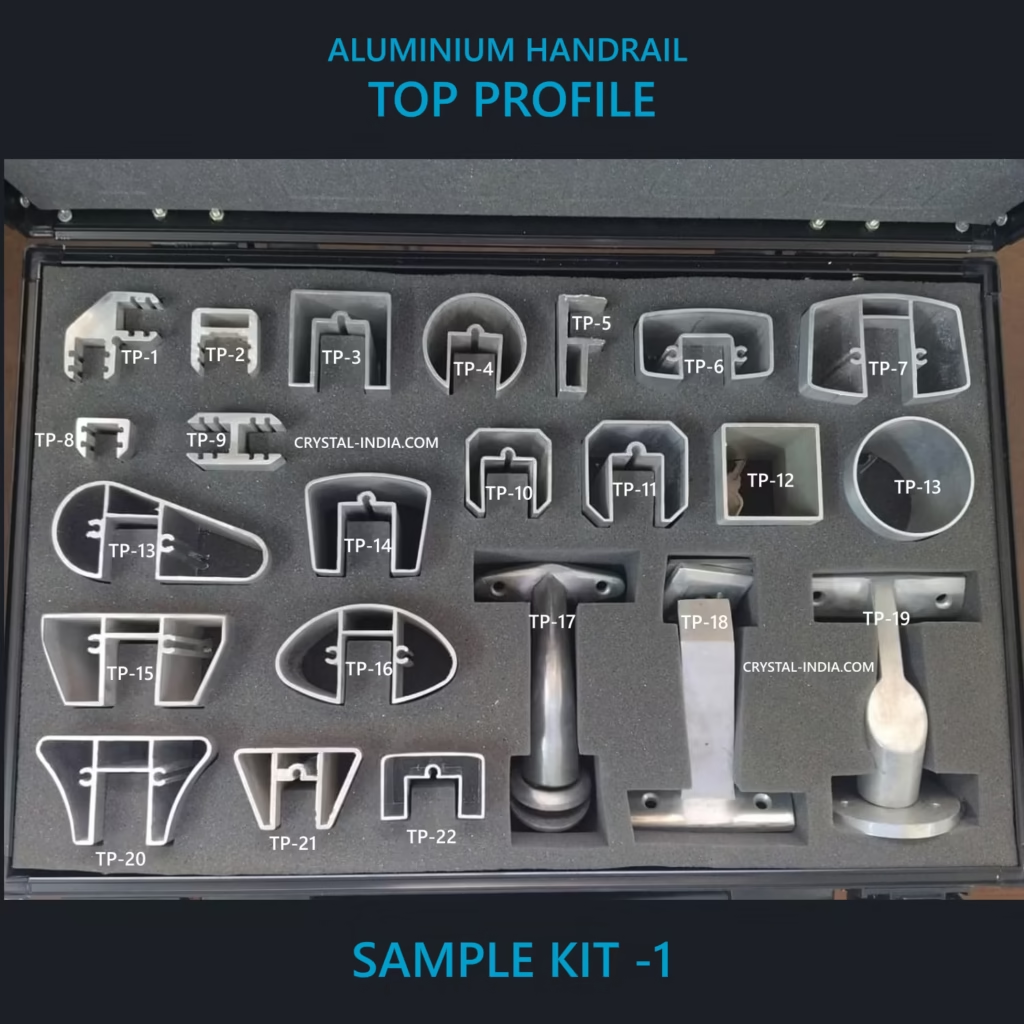
Based on our Top Profile Sample Kit, here is how you can classify and select your handrail sections:
1. Minimalist Slim & Slot Profiles (TP-1, TP-2, TP-8, TP-9)
- What they are: Slim, low-profile tracks designed to cap the top edge of the glass.
- Best For: High-end residential properties where the goal is to keep the handrail as invisible as possible while maintaining safety compliance.
- Design Advantage: They tie the glass panels together neatly without breaking the visual line of the horizon.
2. Geometric & Square Profiles (TP-3, TP-10, TP-11, TP-12, TP-22)
- What they are: Sharp-edged rectangular or square sections.
- Best For: Modern, industrial, and highly structured architectural layouts.
- Design Advantage: Square handrails convey strength and alignment. They pair excellently with sharp-edged interior elements like cubic furniture or minimalist window frames.
3. Ergonomic Round & Oval Profiles (TP-4, TP-13, TP-16)
- What they are: Traditional circular tube or aerodynamic oval profiles.
- Best For: High-traffic commercial areas, elderly-friendly spaces, and external public balconies.
- Design Advantage: Round profiles are highly tactile and offer the most comfortable, natural grip. Oval shapes add a premium, aerodynamic luxury feel.
4. Heavy-Duty Wide Profiles (TP-6, TP-7, TP-14, TP-15, TP-20, TP-21)
- What they are: Broad-based profiles designed with internal chambers to sit securely over heavy laminated glass.
- Best For: Malls, hotels, and public arenas where maximum resistance against leaning loads is required.
5. Wall-Mount & Bracket Components (TP-5, TP-17, TP-18, TP-19)
- What they are: Specialized side-mounting profiles and bracket supports.
- Best For: Off-glass installations where the handrail needs to be mounted directly to an adjacent wall or on a vertical post instead of slotting directly over the glass panel.
Part 2: Aluminium Bottom Profiles (The Foundation of Strength)
BOTTOM ALUMINIUM PROFILES
The bottom profile, often called the base channel, shoe, or spigot, is what keeps the entire balustrade structurally sound. It must bear the weight of the glass and withstand external forces like wind pressure or human impact.
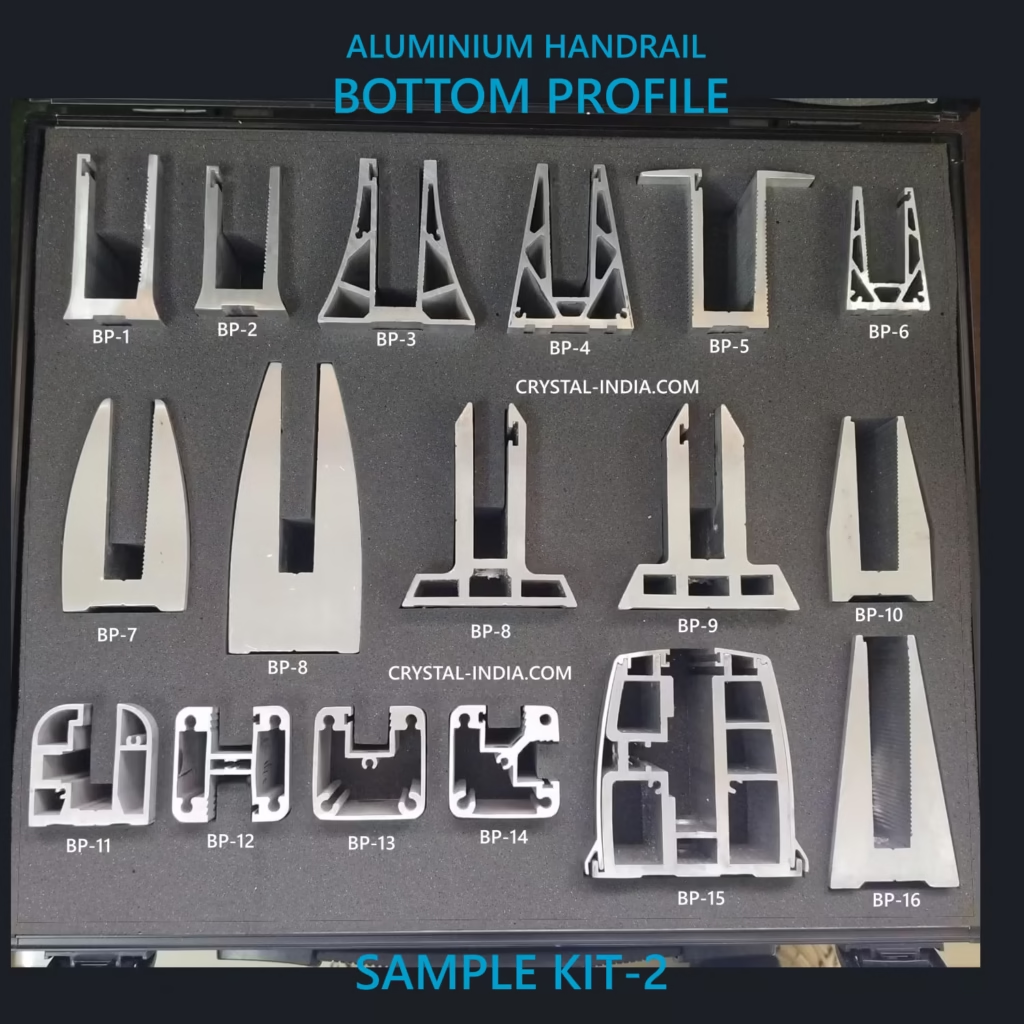
Looking at our Bottom Profile Sample Kit, base profiles are engineered based on mounting techniques and structural load requirements:
1. Standard U-Channels (BP-1, BP-2, BP-5, BP-10)
- What they are: Straightforward, deep vertical pockets where glass is inserted and secured using specialized rubber gaskets and expansion blocks.
- Best For: Clean, floor-mounted installations on flat balconies or corridors.
- Pro-Tip: Profiles like BP-5 feature unique flange lips to help mask flooring edges or tile gaps perfectly.
2. A-Frame & Reinforced Heavy-Duty Channels (BP-3, BP-4)
- What they are: Wide-base profiles featuring internal triangular bracing or multi-hollow chambers.
- Best For: Tall glass panels (12mm to 19mm thickness) and high-wind zones like coastal properties or high-rise penthouse balconies.
- Engineering Advantage: The widened footprint distributes horizontal force much more effectively across the concrete slab.
3. Slimline / Mini-Spigot Profiles (BP-6, BP-8, BP-9)
- What they are: T-shaped or raised-neck channels that lift the glass slightly above floor level.
- Best For: Areas requiring easy water drainage (like swimming pool surrounds, open terraces, and wet bathrooms).
- Design Advantage: It gives the illusion that the glass panels are hovering seamlessly above the floor.
4. Solid Tapered Blocks (BP-7, BP-16)
- What they are: Thick, solid-walled wedge designs meant for heavy industrial usage.
- Best For: Heavy commercial foot traffic installations where maximum durability is non-negotiable.
5. Post & Modular Structural Profiles (BP-11, BP-12, BP-13, BP-14, BP-15)
- What they are: Multi-directional, slotted, or square corner profiles designed to link sections together seamlessly.
- Best For: Staircase turnings, 90-degree balcony corners, and architectural layouts that require complex geometry.
Architect’s Checklist: How to Pair Your Top & Bottom Profiles
When finalizing your bill of quantities (BOQ) or design plan, ask yourself these three critical questions:
- Where is it being installed?
- Outdoor/Balcony: Opt for a heavy-duty bottom channel (like BP-3 or BP-4) paired with a protective, ergonomic top profile (TP-4 or TP-13) to resist weather and wind.
- Indoor Staircase: Choose sleek, minimalist aesthetics. A slim square profile (TP-10 or TP-11) paired with a recessed floor channel (BP-1 or BP-2) creates an ultra-modern floating look.
- What is the glass thickness?
- Always match the slot width of your top and bottom profiles to your glass specifications (typically 10mm, 12mm, or laminated 12.38mm–15.52mm). Utilizing the wrong profile will lead to unstable glass vibration.
- What is the finish requirement?
- High-quality architectural aluminium can be finished in Anodized Matt Silver, Champagne Gold, Glossy Chrome, or custom Powder-Coated shades (like Charcoal Black or Pure White) to match your interior window frames.
Conclusion: Touch & Feel Before You Decide
Choosing the right profile through a screen can be challenging. For architects and designers working on premium residential or commercial projects, having a tangible reference makes all the difference.
At Crystal, we provide specialized Sample Kits (featuring Top Profile Kit 1 and Bottom Profile Kit 2 as shown above) so you can directly test the grip, weight, glass fitment, and finish options before your project goes into fabrication.
Are you planning a project or finalizing a drawing? Explore our complete structural catalog or request a physical sample kit here.